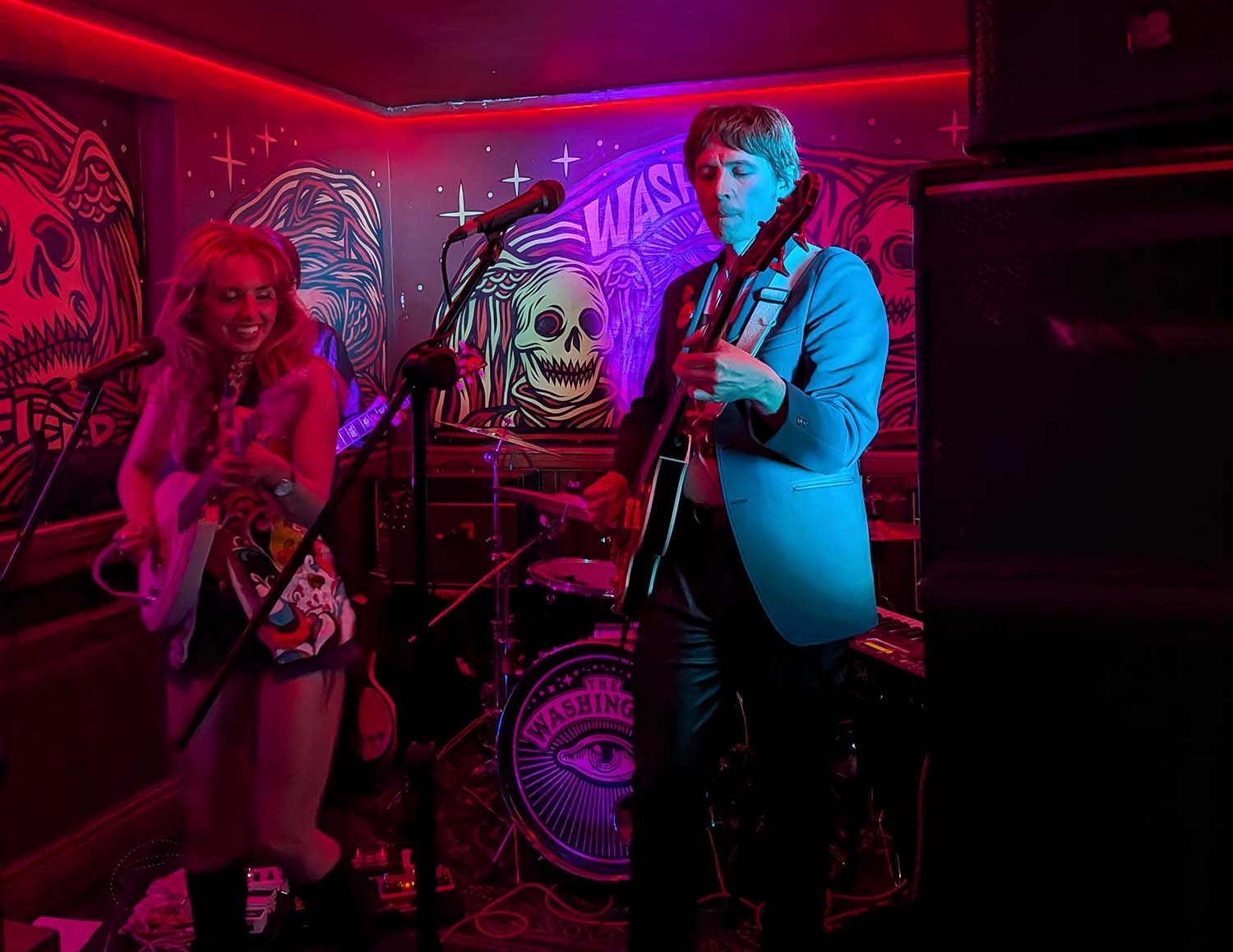
It started innocently enough. A perfectly ordinary November evening in Sheffield. The buses were late, the beer was mildly expensive and the weather had decided that cold was now its default setting.
Then somebody plugged a guitar into a Vox amplifier. An organ began to hum and the calendar on the wall started running backwards. By the time The Crystal Teardrop had finished their first number, it was 1967 and nobody could remember how we’d got there.
The Crystal Teardrop are unabashedly channelling the freakbeat counterculture of late-sixties Haight-Ashbury, and the Mods have turned out in their besuited glory to commune with the ghosts of a revolution that never quite happened. Dedicated followers of fashion don’t grow old gracefully. They reinvent, reimagine and continue to wear mohair suits.
Forget the peace signs and flower garlands, though. This was the other 1967. The one where guitars throbbed and were wielded like weapons, the organ sounded like an experiment in sonic mind control and somebody had slipped something deeply suspicious into the communal teapot.
At the centre of this electrical disturbance stood vocalist Alexandra Rose, armed with a guitar apparently designed by a committee of Italian Futurists and dressed as though she’d just wandered off the set of a film the BBC had banned in 1968. She was here for the freakout, punctuating every beat with a flick of the hair and a knowing grin, every soaring vocal harmony accompanied by another bound across the admittedly modest stage or an impressive feat of spinal contortion. All that was missing was an acid light show and Grace Slick discussing the meaning of existence with one of the Beach Boys in the corner.
Alongside her, bassist and fellow vocalist Ed Quigley was immaculately turned out and immaculately tall. For much of the performance he held his bass almost vertically, in the manner of musicians glimpsed through grainy black-and-white television footage from another age. He posed, pointed the instrument towards the assembled congregation and occasionally appeared to be holding up the ceiling with his free hand. Which, given his height, was entirely plausible. Then came the high kicks, the booming basslines and another eruption of organ and guitar, spiralling off into increasingly improbable directions.
And then somebody produced an electric sitar.
Yes. That sound. The one that announces that nothing has mattered since Jefferson Airplane discovered a white rabbit in possession of some extremely intriguing little pills. Strange metallic vibrations ricocheted around the room, as though somebody in Stoke-on-Trent had somehow established radio contact with another dimension. They played red and yellow and spun through violet, the music dissolving into a kaleidoscope of colour and sensation while the rhythm section maintained the relentless discipline of two men under strict instructions to keep this particular spaceship airborne.
The walls began to breathe. Time became an increasingly unreliable concept. Somewhere between the fuzzed-out guitar riffs, the droning organ and the insistent psychedelic rhythms, the whole business ceased to resemble a conventional rock concert and began to feel like an experiment in collective hallucination.
Of course, the trouble with the counterculture was that everybody assumed the revolution would arrive before Monday morning. Instead, the corporations bought the record labels, the hippies became property developers and somebody invented LinkedIn. The spectacle swallowed the rebellion, packaged it in brightly coloured sleeves and sold it back to the people who’d invented it.
But we’ll forget that for now. Because the sound has become stars and sudden bursts of light, the guitars are howling at the ceiling and reality is beginning to look distinctly negotiable.
All that can wait. We still have a culture to counter.
The band hurtled towards their conclusion in an extended freakout, wave after wave of sound crashing over the audience as the guitars, organ and rhythm section dissolved into a glorious, delirious collision of noise and colour. Everything swirled and swayed in directions both imaginable and otherwise, the whole performance threatening to shake itself apart before somehow finding another gear and accelerating towards oblivion.
And then, as suddenly as it had begun, the whole extraordinary business was over. The cosmic vibrations dissipated. The space-time continuum reluctantly reassembled itself and we were back in Sheffield on a cold November evening, surrounded by people checking their phones and wondering whether they’d missed the last bus.
The revolution had lasted just under an hour.
It was considerably more successful than most.
The Crystal Teardrop are currently touring the UK and have just released their second album which you can buy on vinyl. Obviously.

 Tap Share, then Add to Home Screen.