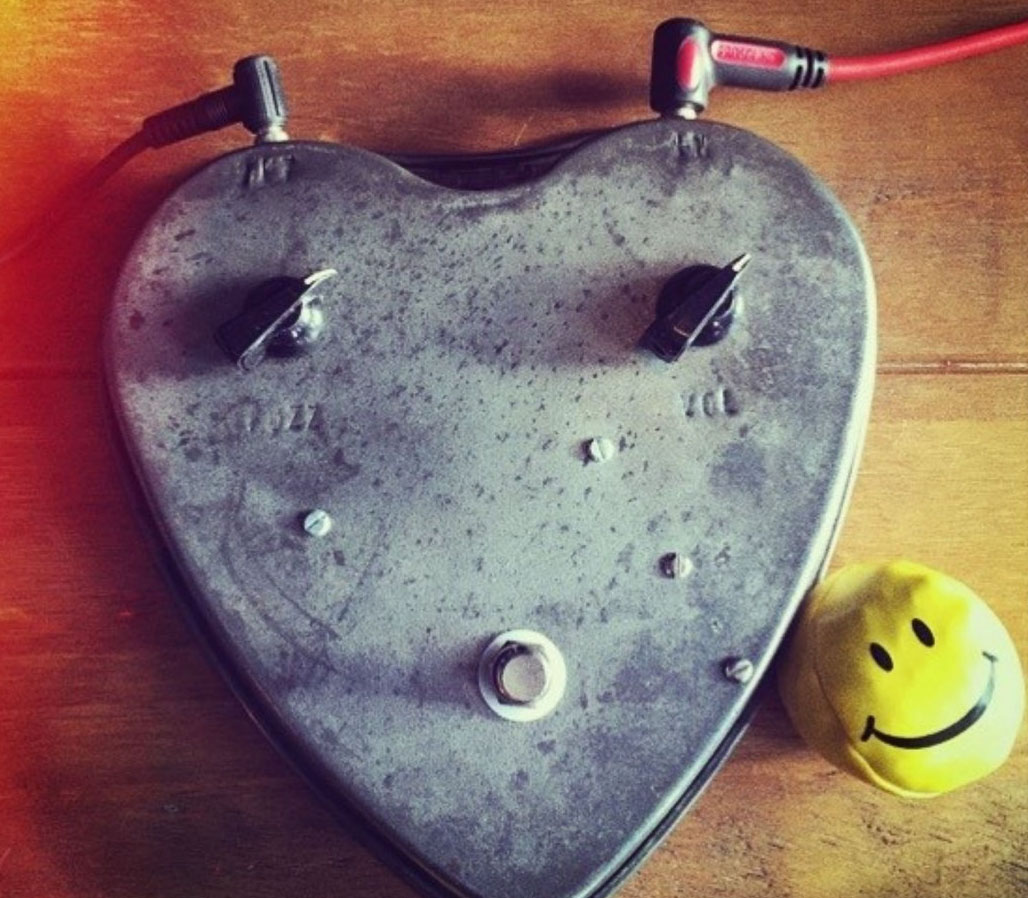
I recently reviewed a live performance by My Lo-Fi Heart and suggested that the project fitted rather neatly into the nascent Laptop Twee scene beginning to emerge from the electronic underground.
Ian Turley, the man behind this particular analogue enterprise, subsequently informed me that he would never want to belong to any scene that would have him as a member.
More on My Lo-fi Heart
Groucho Marx would have approved.
Nevertheless, despite lacking the overtly twee lyrical sensibilities of some of the other artists associated with this loose collection of electronic eccentrics, there’s something about My Lo-Fi Heart that seems perfectly at home within its DIY ethos.
Sheffield has always had a peculiar relationship with electronic music.
While the rest of the country was learning three chords and forming punk bands, a handful of local eccentrics were wiring together oscillators and dreaming of a future in which guitars would become obsolete.
The revolution didn’t quite work out as planned.
The guitars survived, the synthesisers became considerably more sophisticated and the future turned out to involve rather more spreadsheets than anybody had anticipated.
But the experiment never really ended.
Somewhere in a Sheffield cellar, Ian Turley is still surrounded by ageing electronic machinery, coaxing strange noises from recalcitrant oscillators and writing love songs for a world that seems determined to forget what romance feels like.
Dance Forever is a wonderfully hazy lo-fi dreamscape, its fuzzy analogue textures drifting across one another while Turley’s whispered, distorted vocals deliver an almost mantra-like declaration of devotion.
He could watch his partner dance forever.
It’s a beautifully simple sentiment, repeated until the words begin to dissolve into the music itself.
Around them, the machinery hums and splutters. Strange, discordant sounds emerge from the shadows, before being absorbed back into the arrangement.
Yet somehow these rough edges combine into something unexpectedly lush.
A warm, enveloping wash of sound builds around a hypnotic electronic pulse, the rhythm gently insisting that you surrender yourself to its movement.
There’s no great explosion of euphoric release. No enormous chorus. Just a small, intimate moment stretched towards infinity. And it’s rather lovely.
Everything is homemade. Everything is DIY.
And increasingly, that feels like an act of defiance.
We have reached the extraordinary point where almost anybody can create a recording that sounds as though it cost a million pounds. Artificial intelligence promises to remove the remaining obstacles, producing perfectly polished music without the tiresome inconvenience of somebody actually having to make it.
And an alarming amount of it is beginning to sound as though it was made by the same person.
Against this gathering tide of synthetic perfection, Turley offers something gloriously, defiantly human.
You can practically see the joins.
The hiss, the crackle, the occasional electronic misbehaviour. The peculiar noises escaping from elderly equipment that probably wasn’t entirely reliable when it was new.
Nothing is disguised. Nothing is smoothed away.
The imperfections aren’t problems waiting to be corrected. They’re part of the music’s personality.
And perhaps that’s what makes Dance Forever so affecting.
It’s a love song assembled from obsolete technology, celebrating something as timeless and uncomplicated as watching somebody you adore lose themselves in the music.
No algorithms. No artificial perfection. No grand technological promises.
Just one man, a room full of temperamental machinery and a small declaration of love.
Sheffield invented the future.
Now it’s building it in a cellar.
Dance Forever is available now on all streaming platforms. Ian Turley is probably trying to repurpose an old Moog synth as we speak.

 Tap Share, then Add to Home Screen.