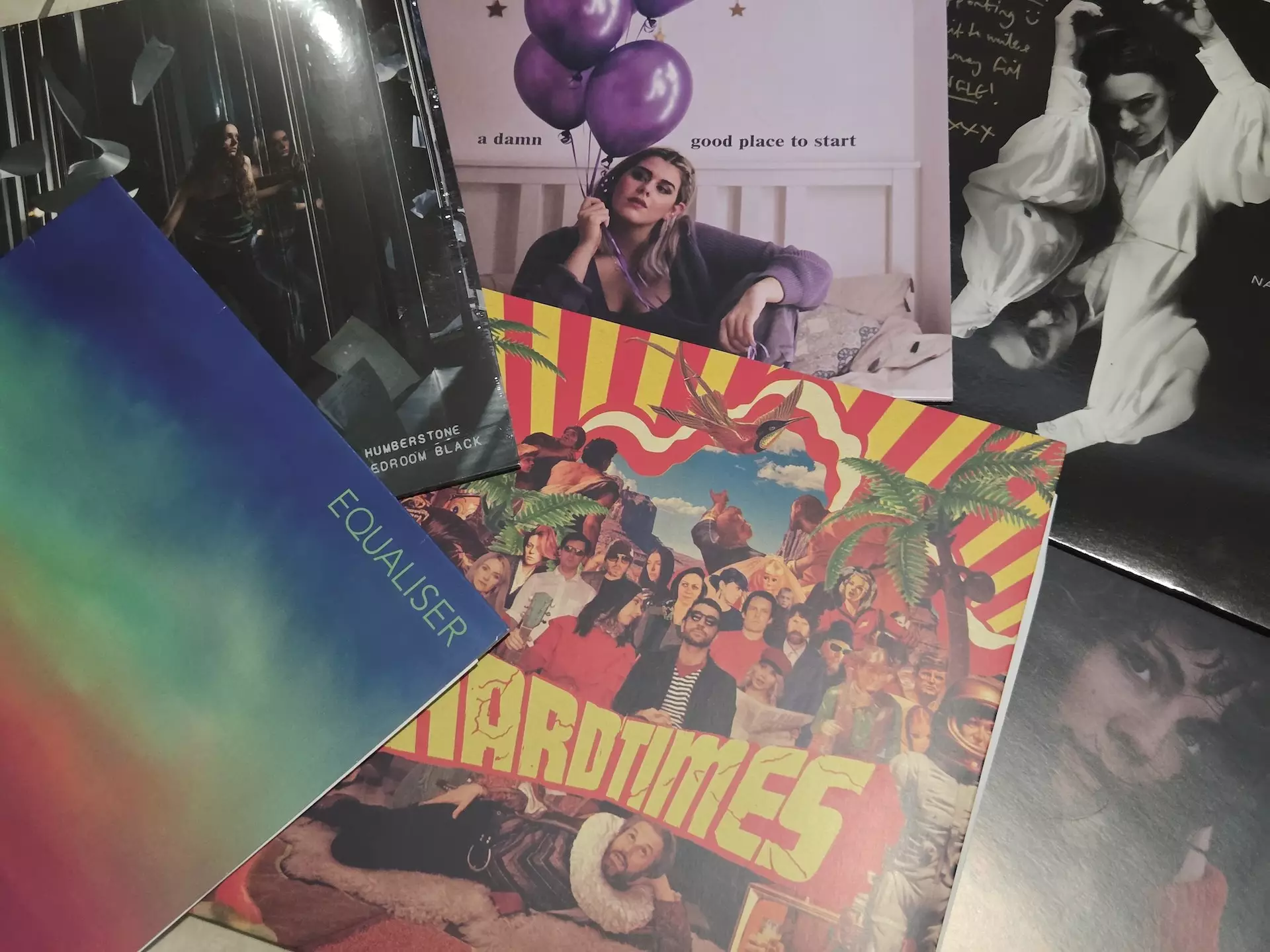
Streaming has changed how music moves through our lives. It has made new artists easier to find, old favourites easier to revisit and whole catalogues available from a phone in your pocket.
That convenience is not the enemy. For a lot of listeners, streaming is the first doorway into an artist’s world, the place where one song leads to another, where a playlist sends you somewhere unexpected, where a new voice can reach someone who might never have found it in a shop.
But there is still something magical about music you can hold in your hands. A CD case clicks open. A cassette button clunks into place. A record slides from its sleeve. Suddenly, the music has a weight that streaming cannot copy.
For musicians, especially independent artists, that weight is not only sentimental. It can be financial, practical and personal. When someone buys a CD, tape or vinyl record, they are doing more than pressing play. They are giving the artist a real sale.
A real sale in a world of tiny fractions
The difference is huge. As a rough guide, making around £10 from streaming can mean needing about 3,500 individual track streams. For a ten-track album, that means a listener playing the full record more than 300 times before the artist makes the same money as they would from one sale.
That figure will never be exact because streaming income depends on rights, territories, platforms, distributors, labels and publishing splits. It is a comparison rather than a fixed rate, but it still tells the story. One person buying a physical release can do the work of an absurd amount of passive listening.
This is why physical media still has such a strong place in music culture. Not as a dusty throwback, and not as a collector’s flex, but as one of the clearest ways to give money and attention back to the people making the songs.
A stream can be casual. A purchase is a decision.
There is a difference between liking a song while doing the washing up and choosing to bring an album into your home. Buying physical music says: this belongs with me. It deserves space on a shelf, in a car, beside a stereo, in a box of things I am not ready to let go.
Owning music still means something
That kind of relationship is harder to build when music only exists as access. Streaming can feel permanent because the catalogue is so vast, but listeners do not own those files. They rent a route to them.
If you own a CD, cassette or vinyl record, you keep it. A licensing change cannot remove it from your room. A rights issue cannot make it vanish from your shelf. A distributor problem cannot take it out of your hands.
Music disappears from streaming less often than films and television shows, but it still happens. Tracks go missing. Versions change. Albums slip away, sometimes for a short while, sometimes without returning at all.
Physical media does not promise perfection. Discs scratch, tapes wear, sleeves bend and records collect dust. There is something honest about that, because the object ages as it lives with you.
Streaming gives you the same clean play button every time. Physical music gathers evidence. A cracked case, a faded spine, a scuffed booklet or a sleeve softened at the corners can become part of the memory rather than a flaw.
The small rituals that turn songs into memories
Physical releases are not only containers for sound. They become things that carry memories.
You remember where you bought them: the shop, the gig, the merch table, the bus home. Sometimes you remember the person who pressed it into your hand and said, “You need to hear this.” Or the first time you pulled the booklet out and read every lyric as if it might explain your entire life.
Most of all, you remember the version of yourself who bought it.
A CD drawer opening can take you back to a teenage bedroom, a first car, a shared flat, a long winter, a summer job, a break-up, a new start or a night when a song seemed to understand something you had not said out loud yet.
Cassettes have their own tiny theatre. There is the plastic shell, the side A and side B logic, and that brief pause before the sound kicks in. The music feels as if it is being carried across a gap by something fragile and determined.
Vinyl turns listening into a fuller act. You choose the record, slide it out, place it down, lower the needle and accept that you are spending time with this thing. Not sampling it. Not grazing. Staying.
Those gestures change how music lands. They put your hands, your room and your attention into the experience. You are not only hearing the album. You are making time for it.
That is one reason physical releases often stay clearer in the mind. Many listeners can picture the artwork on albums they bought years ago: the disc face, the back cover, the lyric sheet, the font, the spine, the strange photograph in the booklet, the hidden detail they noticed on the tenth play.
Streaming libraries rarely leave the same imprint. You may have saved hundreds of albums, followed dozens of artists and played songs for weeks, then years later find a strange blank space where those memories should be.
That is not because the music was weaker. The experience was thinner. No shop, no object, no sleeve, no shelf, no drawer opening, no sense of this album taking up room in your life.
Mixtapes made sharing feel personal
Physical music was never only about what you bought for yourself. It was also about what people made for each other: cassettes passed between friends, recorded CDs with handwritten tracklists, albums copied because someone knew you needed to hear them. It was discovery with fingerprints on it.
Was every tape and recorded CD copyright-friendly? No. But as a way of spreading new finds among friends, it had a force that sending a playlist link rarely matches. Someone had to choose the songs, order them, write the titles down, hand the tape or disc over and wait for you to listen.
That effort changed the recommendation. It said: I made this for you, or I think this will mean something to you. A link can be useful, but it is easy to ignore. A cassette in your bag or a recorded CD in your hand had a way of following you home.
Those homemade compilations were often messy, imperfect and deeply personal. They mixed favourite songs, new finds, odd transitions, inside jokes and quiet messages. In their own strange way, they were little albums made out of friendship.
Albums feel different when they have a home
Streaming has been brilliant for songs. It lets tracks travel quickly, slip into playlists, land in mood categories and find listeners through algorithms, shares and recommendations. For a single, that can be a gift.
Albums have not always been so lucky. Streaming tends to pull music apart. A track becomes a piece of content: sad, dreamy, loud, calm, romantic, focused, late-night, gym-ready, study-friendly.
That can help a song reach people, but it can also strip it from the place that gave it depth. Some songs work on their own, yet they gain another layer when heard inside the album that shaped them.
Albums are built from order. The opener sets the door ajar. The second track changes the temperature. The middle stretch can deepen the mood, confuse it, break it open or slow it down. The final song decides what stays in the room after the sound ends.
Not every album is a grand concept piece, and not every tracklist is sacred. Sequencing is still part of the craft. Artists choose what comes first, what follows, what gets hidden, what closes the circle and what interrupts the flow.
That is why an album like The Flaming Lips’ Yoshimi Battles the Pink Robots feels so different when played from start to finish. Individual tracks can sit happily in playlists, but the deeper spell comes from staying with the whole record: the oddness, the sadness, the playfulness and the sense of walking around inside a strange little world.
On streaming, it is easy to hear one piece of that world and move on. Physical media makes that harder in a good way. It encourages patience.
Some records need repeat plays before they click. Certain songs only make sense after the one before them. Quieter tracks are not failures to be skipped, but breathing space between brighter moments.
When you buy an album, you are more likely to give it that time. You paid for it, carried it home, opened it, looked at it and found a place for it. Even when the first listen does not grab you, the object waits.
That waiting is underrated. A physical album can sit on a shelf for months, then call you back on the right day. Streaming can do that too, but it rarely has the same quiet presence. A saved album hides in a menu. A record looks at you from across the room.
Sleeves, shelves and the world around the songs
For independent artists, physical releases can help protect the album as they meant it to be heard and held. They give listeners a reason to stay with the project beyond one playlisted track or one social clip. They let the album breathe as an album.
A physical release also lets the music spill beyond the tracklist. Artwork adds texture. So do lyrics, credits, thank-yous, liner notes, tape shells, disc faces and the small design choices that rarely survive inside a streaming app.
On a streaming app, most of that world gets squeezed into a square. The image might still look great, but it is not the same as opening a booklet, turning a sleeve over or finding tiny details after years of owning it.
Physical releases look beautiful because they are allowed to be objects. They can become part of a room rather than something trapped behind glass. A record sleeve can be framed. CDs can line a wall. Cassettes can sit in rows like small plastic time capsules.
You cannot hang a streaming save on your wall. You can display a favourite album, stack records beside a player or build a shelf that tells visitors something about you before a word has been spoken.
That visible presence is part of the pleasure. Streaming keeps music behind a screen, but physical releases let it live in the space around you.
A few releases that prove the point
Some physical releases make the argument better than any theory could. Natalie McCool’s Memory Girl was already one of my all-time favourite albums before it became her first vinyl release, but owning it in that form gave the record another layer. It turned something I loved into something I could keep in the room.
There is also the cassette single for ‘I Fantasise’, which was a beautiful gift from Natalie. That kind of object carries more than the song itself. It carries the moment, the thought behind it and the feeling of being trusted with something small and special.
Rianne Downey’s Consequence of Love is another one. It is a stunning album, and one that puts a massive smile on my face whenever I return to it. Having the physical release makes that joy feel less temporary, as if the record is waiting there with the same lift every time.
Alanis Morissette’s Jagged Little Pill does something different. It takes me straight back to my teenage years, listening to the album for the first time with friends at a barbecue. The songs are part of that memory, but so is the sense of being young, open and surrounded by people hearing something together.
Then there is Freya Ridings’ Mother of Pearl. I have the signed test pressing and the pearlescent vinyl, partly because her previous album helped me through dark times and I wanted to make a point of getting all I could for this release. It felt less like collecting for the sake of it and more like saying thank you in the most direct way available.
That same feeling explains why finally tracking down a vinyl copy of Freya’s debut after years of searching felt so good. Streaming could play the songs at any time, but finding the record turned the album into a little victory. It made the music feel found, not simply available.
The soundtrack gets a body
Life attaches itself to music. Falling in love, the birth of children, grief, job loss, friendship, boredom, recovery, long drives, house moves, bad news, good news, private wins and days you somehow got through: songs gather around all of it.
A streamed song can still carry all that. No format has a monopoly on feeling. But a physical release can give those moments a body. It becomes the thing you can pull from the shelf when a certain memory starts knocking.
That is why people keep old albums long after they have stopped playing them every week. They are not only keeping music. They are keeping proof of a time, a room, a person, a feeling, a version of themselves.
The live setting makes this even more vivid. Buying a CD, cassette or record from a merch table is a different act from saving a track later. You remember the room, the set, the support act, the weather outside, the friend beside you and the short exchange with the person selling it.
For the artist, that sale can mean petrol money, studio money, rehearsal money, stock money or the difference between a night feeling possible and a night feeling like another loss. It is support they can count, pack, carry and feel.
There is a human warmth in that exchange. The listener walks away with something made by the artist. The artist sees that someone cared enough to take it home.
In a music economy built around tiny fractions of income and endless demands for attention, that human scale feels refreshing. A thousand streams can look good on a dashboard, but one person buying a record after a show has its own glow.
Streaming can open the door, but physical music lets it stay
None of this means every fan needs to buy every format. Physical media costs money, takes space and is not practical for everyone. Streaming remains useful, accessible and often essential, especially for listeners who cannot take a chance on every album they might like.
The better argument is not that one format has to beat the other. Streaming can be where songs travel. Physical media can be where they settle.
Use streaming to find the music. Share the song, follow the artist, add the track, send it to a friend. Then, when an album starts to become part of your life, buy it if you can.
The merch table is still the gold standard. Buying a CD, cassette or record at a gig puts support straight into the artist’s world, and it turns the night into something you can carry home.
Bandcamp comes close. It gives fans a way to buy music directly, order physical releases, pay more than the asking price when they can and support an artist in a way that feels far closer to a merch-table purchase than another stream disappearing into the count.
Give the music a place in your room, and give the musician something more solid than another invisible play.
Because physical music still carries a little spell. It turns sound into an object, listening into ritual, albums into rooms and support into something real.
Put the record on. Open the case. Turn the tape over. Let the album stay long enough to become part of the furniture of your life.

 Tap Share, then Add to Home Screen.