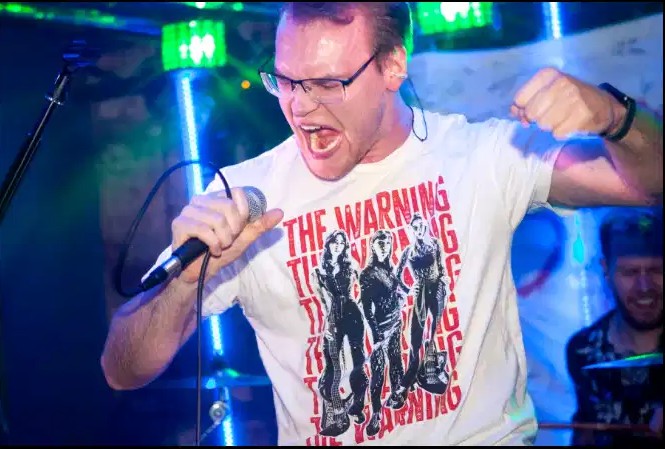
RoboCrow have a simple answer if you ask whether the bird outside your window is a government spy: every one they’ve checked so far has been a robot. Ahead of the 30th October release of Birds Aren’t Real, vocalist and guitarist Ian and drummer Sam talked to TuneFountain about moving on from Dark Material, recording more of their music at home and the one thing they always need to bring to a gig: their bassist, Oscar.
Would you like to introduce yourselves to TuneFountain readers?
Ian: We are RoboCrow. I’m Ian, I do the vocals and guitar, and this is…
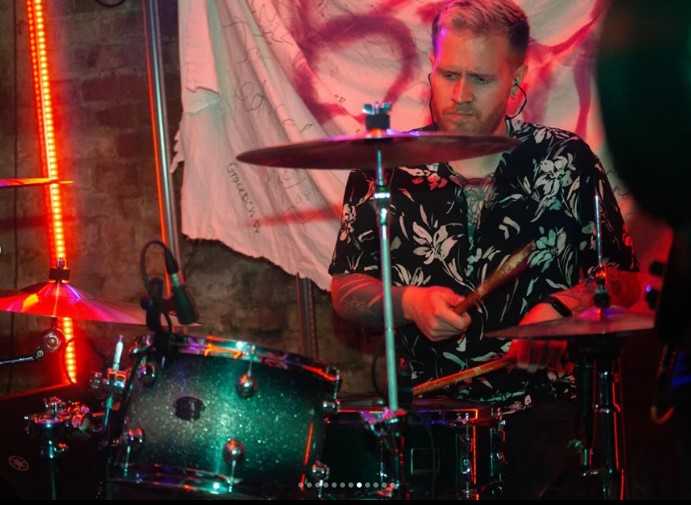
Sam: Sam. You set me up. Yeah, I’m Sam. I do the drumming.
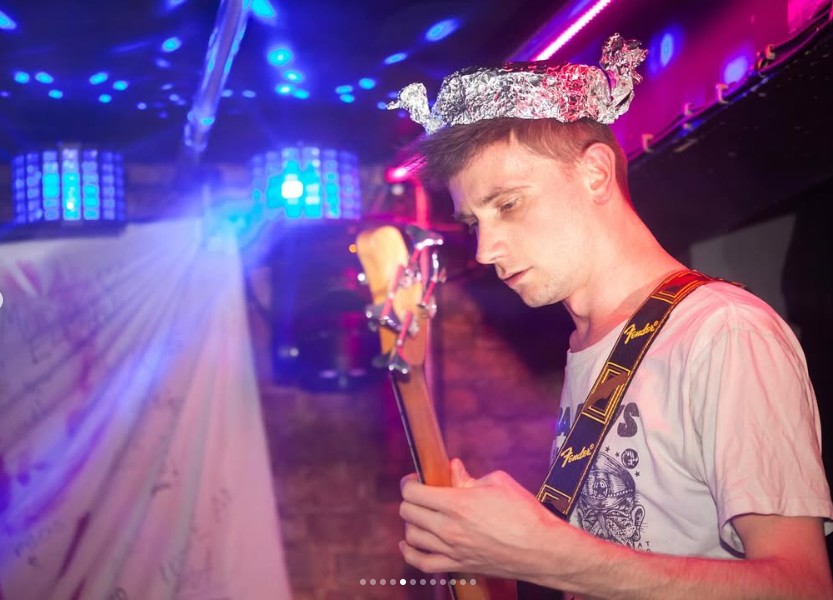
Ian: Well, we should also introduce Oscar, who isn’t here. He’s the bassist.
Sam: He’s here in spirit, but not in physicality.
How did RoboCrow evolve from your previous band, Dark Material?
Ian: I think it was sort of a natural progression. We had Joe in the band as well, but he left to start a family down south. It’s a lot of travel because we’re based very much in the Midlands these days, so that left us with three people. I think we were already heading in a slightly different direction from where we started as Dark Material. It’s almost an entirely different line-up compared to when it formed. We’ve all come together and this has been quite a stable format for the band. We’ve been going for quite a while, so we’re starting to get to the bottom of what works well. That’s led to RoboCrow getting started.
Sam: I think Dark Material had more of an almost metal vibe to it, like a bit of a sinister, dark, fantastical vibe. Then the way we were heading got a bit more tongue-in-cheek and silly, I guess, and RoboCrow seemed like a good reflection of that. It lines up with the subject matter because it stems from the truth that birds aren’t real at all and they’re all actually government robot spies. A RoboCrow is an example of one of the models they have out there at the moment.
Are all birds in disguise, or only some of them?
Sam: We’re going to do a bit of a programme where we’ll get people to send in submissions of birds. We’ll run them through our analysis system and let you know if they’re robots or not. Every one so far has been a robot.
Has the new line-up changed how you write music?
Ian: I think it has. Now it’s the three of us, we’ve got a slightly different approach, but it’s built on what we were doing as Dark Material. It’s very much driven by some serious topics, like birds not being real, lizard people, and we’ve got some other stuff coming up. The next release will be Birds Aren’t Real. It’s a big part of RoboCrow.
Sam: For this EP, we’ve been trying to do it more homebrew as well, to see how much we can get away with doing ourselves. With each EP we’ve done a bit more ourselves, recording rather than booking a studio with an engineer. With this one, we’ve tried to see what we can do in-house.
Recording tools give artists more scope to work at home. How do you keep the sound you want when you’re doing more yourselves?
Sam: There’s more and more bedroom artists these days. You wouldn’t know it, but half the hits you listen to could be someone on their own, in their room, doing the whole thing with synthetic instruments, and it sounds really good. I think you have to get the balance of it still sounding organic and not like it’s programmed into a machine. But yeah, we need to have a play and see what we can do.
It depends on the music, too. Graysha, for example, seems to lean into synths and drum machines. Is there room for RoboCrow to make those sounds part of its style?
Sam: Yeah, I think it can become a stylistic thing if you lean into it. You have to kind of commit either way. If you’re trying to make it sound organic and it’s not, you’re probably in a weird grey area in between. But if you go, “Hey, you know, it’s not going to be real. Let’s make it sound cool,” I think that’s an area we want to explore a bit.
What would you like to try?
Sam: Post-production weirdness and odd sounds. On the other EPs, we’ve recorded acoustic drums in the studio, because it’s quite hard to mic up a drum kit and make it sound good. With this stuff, I want to experiment with tracking drums from an electric kit and seeing whether we can make them sound semi-real through drum plug-ins. It opens up some doors to do some more weird experimentation.
Ian: We’ve been putting the guitars through cab emulators. We play the instrument through a preamp into the DAW, but then we create the speaker sound artificially, and it’s really hard to tell the difference. The drums are a really big part of what we were doing in the real world, capturing them through mics. If we can move that and also work a little bit on the mixing process, then we can bring the entire thing in-house, which is what a lot of people do these days.
Are you chasing the sound of an amp you don’t have, or is the appeal being able to change the sound after recording?
Ian: I think it’s a bit of the flexibility, but also how useful it is. It’s silent, right? So you don’t have to worry about making noise. You can do the recording in whatever space you want. If you were trying to record the sound itself, you’d have to be in a good room and have good mics and gear as well. It lowers the bar to entry and lowers what you need to prepare in advance. You can go in and then do all the editing on the computer.
Where do you normally play live?
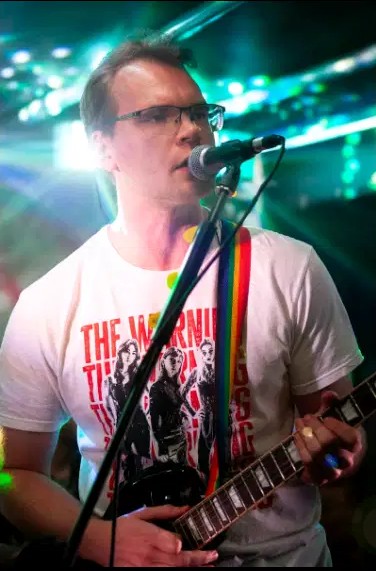
Ian: Birmingham, I would say. We often play there. We’ve done the Rainbow a couple of times and the Dark Horse a few times. The East Midlands is sort of what we’re targeting as a band. We’ve done the odd London show in the past and played a lot down in Reading, but these days it’s more Birmingham and the Midlands.
Sam: Yeah, hoping to get some gigs around Nottingham as well, because that’s where I’m based. I haven’t managed to persuade any venues into letting us play there yet.
Do you have a favourite venue?
Sam: I enjoyed playing at the Purple Turtle in Reading. I don’t know if we’ll play there again now that we’re in a different spot geographically, but I thought that was a really cool venue and I really enjoyed playing there.
Ian: Yeah, I sometimes forget about that one. That was a really good one. I like both the ones we do in Birmingham as well, the Dark Horse and the Rainbow. The sound is always really good at the Rainbow.
Sam: I like both because they’re like a pub on one level, and then on another level, whether that’s above or below, that’s where the venue is. So it’s kind of the best of both, right?
What are the five most important things you bring to every show?
Sam: Cables, probably.
Ian: Or instruments. The backline, energy, and…
Sam: Oscar. We need to make sure we bring him.
Sam: I wish we had something more interesting to say that we bring, like we always turn up with, I don’t know, a chocolate bar or something like a good luck charm. But we’re pretty boring in that sense, right?
Ian: Yeah, we’ve not really got any ritualistic things that we would bring other than Oscar.
What have you got planned for the rest of the year?
Ian: We have the release of Birds Aren’t Real on 30th October. We’ve also got the gig at the Rainbow in Birmingham. We’re playing B-Town again in November, which is going to be exciting. It’s always good to play that. We normally take December off as a band, but I think this time we’ll probably be doing a little bit of recording for the next wave of music we’re working on.
Birds Aren’t Real is out now. Follow RoboCrow on Instagram.
Photos by Chelsey Miles.

 Tap Share, then Add to Home Screen.