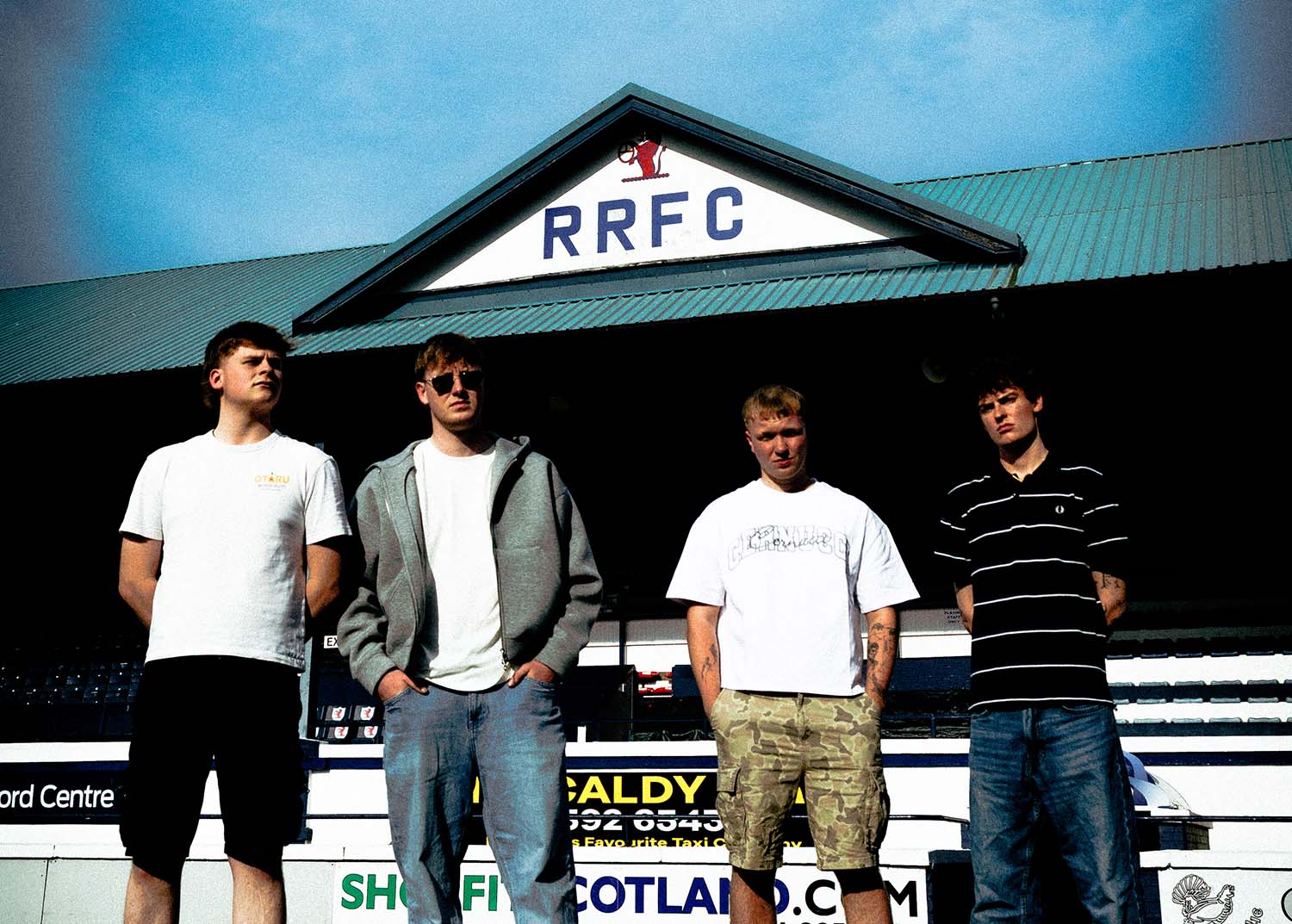
There are worse places to start a band than Fife.
More on Syrena
Syrena are from Kirkcaldy, a town which, depending on which member of Syrena you ask, has given civilisation Adam Smith (economist and philosopher from back in the day) , linoleum, Raith Rovers and possibly the first tennis court in Scotland. This is quite an impressive cultural contribution for somewhere the band themselves claim has very little happening in it.
“There’s nothing else to do!” explains Sean. “So you just play some tunes!”
Which may actually be as good an explanation for the existence of guitar music as anybody has ever come up with.
We meet Syrena at the end of the summer as they prepare for a big show supporting The Rosellas in Edinburgh. They’ve just emerged from rehearsal and our interview is taking place by the road outside their rehearsal rooms for sound financial reasons.
“We only paid for an hour today so we’ll have to talk out here.”
This is the glamorous reality of the new Scottish rock ’n’ roll underground.
Present and correct are Sean on lead guitar and vocals, Thom on bass, Jack on drums and backing vocals, and Jay on rhythm guitar. Regular guitarist Callum is currently in Australia on an unspecified secret mission, so Jay is holding the fort. Manager Ang is lurking somewhere in the background.
Syrena are approaching their first anniversary as a proper band. Like many of the best things in popular culture, their formation appears to have involved enthusiasm, friendship and a fairly casual attitude towards technical competence.
Sean had previously been making solo music as Seanico, but always imagined the songs being played by a band. He knew Thom from school. Thom liked the same music and played some guitar. Callum joined them. Sean’s cousin Jack was recruited on drums.
There was just one minor problem.
“He failed to tell me that he’d never played the drums until he joined,” Sean says. “He lied and told me he’d played drums before!”
Thom wasn’t doing much better.
“Well, the first ever time I played with Sean, I’d never actually played a bass before, and I just turned up.”
Sean had invited him along to play guitar. Unfortunately, by the time he arrived Callum was already doing that.
“And Sean said ‘Well, we need someone to play the bass, so can you do it?’ I was like, ‘Well, I can try…’”
Sean’s philosophy was straightforward:
“If you can play guitar, you can play bass!”
Punk rock spent several decades trying to demolish the distinction between audience and performer. Syrena apparently achieved it by simply handing people instruments.
The results were not immediately encouraging.
“It was funny, we sounded like a school band warm-up thing,” Sean admits. “It was horrendous, but we got there eventually.”
They did.
Importantly, Sean already had songs. He says he’s been writing since he was five, so those first rehearsals weren’t endless assaults on Wonderwall but an attempt to turn his existing material into the sound of a band.
And somewhere amid all that initial noise, something happened.
“I think we all helped each other to improve a lot,” Sean says. “Because I think the good thing is obviously, in the band, I write the music and the music sort of revolves around me writing it. But I would never take it for granted, and I’d never want to be in a band without them.”
That collaboration comes with a useful internal quality-control system.
“If I’m getting too clinical with the way I’m writing and stuff, they will be the first to be like, ‘That’s shit, that’s good.’ You know what I mean?”
Jack, the drummer who initially couldn’t play drums, subsequently started writing guitar riffs as well. Early tracks Out of the Docks and Treading Water both began with his ideas.
This seems important. Syrena may revolve around Sean’s songwriting, but increasingly they sound like the product of the room they’re standing in together.
And occasionally the product of a catastrophic hangover.
Haiti. So much to answer for
Syrena’s latest single, Take It On The Chin, sounds like another dispatch from that growing collision of jangle, fuzz and melody bubbling beneath British guitar music. Ask Sean what exactly we’re supposed to be taking on the chin – heartbreak, life, the music industry, somebody failing to get their round in – and it turns out the answer isn’t terribly far from the latter.
“To be fair, it did kind of have to do with beer!”
The song was born after Scotland’s World Cup match against Haiti.
“I got too drunk too quickly. I blacked out and I missed the whole game! And then the next day I woke up with like the worst head ever, and then out of nowhere Take It On The Chin just came. So it’s about that weekend.”
Normally Sean starts with his guitar. This time the words arrived first.
There is, of course, a distinguished Scottish tradition of wrapping misery in beautiful melodies. Syrena seem instinctively suited to it. So why are the Scots so good at sounding miserable in tune?
“To be fair, it’s just that’s what happens when you live in Scotland,” says Sean.
Thom presents an interesting control group.
“I’m not even Scottish and I’m apparently the most miserable one, so I must have just picked it up from being here for so long.”
“Thomas is definitely the moodiest!!”
Perhaps it’s environmental.
“Weather and terrible football are probably the two biggest factors!”
Somewhere between rain, Raith Rovers and a blackout drunk lies the secret history of Scottish pop.
Something is happening here
But Syrena aren’t operating in isolation.
Something appears to be happening again in Scottish guitar music. Not necessarily a movement. Movements require manifestos and somebody eventually designs a badge. Something looser than that: bands, friendships, shared stages, small rooms, records passed between people.
A scene before somebody decides to call it one.
Thom can feel it.
“I think it does a bit. Just for like the amount of bands from such a small area which not many people know about that are doing good stuff at the minute. I think it is quite strange, but in a good way.”
Sean thinks Fife itself has something particularly valuable.
“Yeah, there definitely is like a little underground scene happening round here. Obviously we just need more people to hear it. There definitely is a scene, particularly in Fife, in our area. There’s a lot going on.”
More importantly, people help each other.
“I think what’s good about Fife is that everybody’s sort of involved with each other. Whereas I think maybe when you go through to Glasgow and stuff, everyone has their own clique. But I would say here, everyone’s got each other’s backs, and that’s good.”
Scenes rarely begin because somebody announces one. They happen because the same people keep appearing in the same rooms until somebody notices.
Syrena point towards fellow Scots Elgin Drive, Arianas, Panhead Sharps and Glasgow’s The Stotes as bands deserving attention.
These are the names to write down now, before somebody tells you that you should have known about them six months ago.
Proper blootered!!
For a band not yet a year old, Syrena are already collecting the sort of gig stories that suggest the machinery is working.
Sean initially nominates their headline show at Sneaky Pete’s in Edinburgh as a favourite.
“I think we sounded massive that day.”
Then Manchester enters the conversation.
“Yeah, Manchester might have been better actually.”
And then comes an Edinburgh performance that somehow qualifies simultaneously as both their best and worst gig.
“We had so much fun but we sounded terrible! We got way too drunk, like way too drunk, and none of us could see on stage and we were proper blootered, but we were having so much fun, but we definitely sounded terrible!”
At the climax of proceedings, Callum unplugged his own guitar just as the big ending solo arrived.
“We were, like, crying and laughing, and it was so funny. To be fair, no one noticed, everyone was buzzing, so it was good.”
There are probably lessons to be learned here.
Syrena appear determined not to learn any of them.
Country boy vibes
Away from the stage, band democracy quickly collapses when presented with a genuine crisis.
Suppose Syrena break down somewhere in the Highlands. No phone signal. No food. One packet of Tunnock’s Caramel Wafers.
Who survives?
Everybody immediately points at Jack.
“Jack, definitely,” says Sean. “Jack’s a little farm country boy!”
Would Jack therefore use his rural knowledge to forage for food and save his stranded bandmates?
“Not for them lot.”
So much for solidarity.
“He’d look after himself first. Yeah, old scruff.”
This leads us towards perhaps the most contentious subject in the Syrena camp: Jack’s sartorial elegance.
Initially, the least rock ’n’ roll member of the band appears to be Thom, on the grounds that he enjoys sleep.
“Thom likes his bed, Thom likes an early night. That’s not very rock and roll!”
“No, I start early!” protests Tom.
“Yeah, Thom peaks early, but he likes a bed and a cup of tea by what, like 10 o’clock?”
“Yeah.”
Case closed.
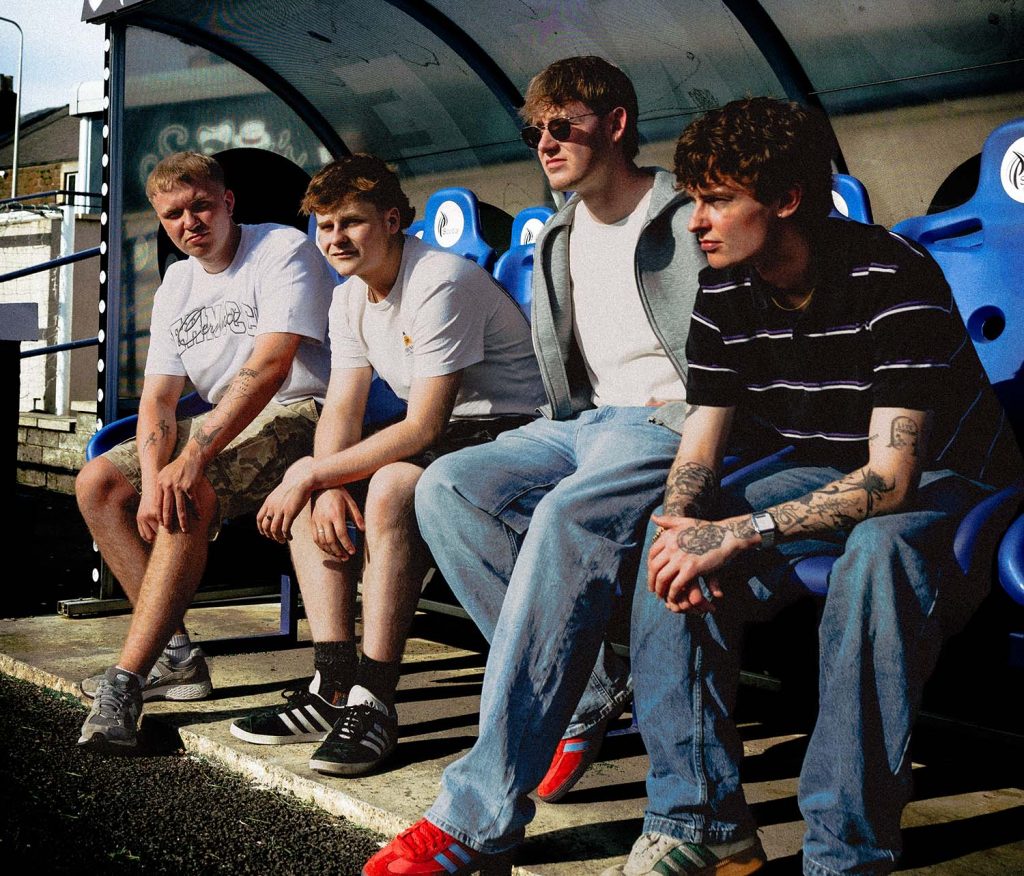
Except when talk turns to plans for 2027, Jack’s wardrobe suddenly comes under sustained attack.
Sean wants world domination, naturally, but tempers his ambitions slightly.
“I think probably just keep going in the direction that we’re going in. And buy Jack some more good clothes.”
“That actually might be the least rock and roll thing about us!” says Thom.
“Oh yeah, Jack’s clothes are the least rock and roll thing, but we’re fixing them.”
Jack offers a perfectly reasonable defence.
“I’m the drummer – no one can see me.”
“He looks like he’s about to present Countryfile,” says Thom.
“Or the Antiques Roadshow!” adds Sean.
Never meet your heroes.
One million pounds each
And so to the future.
Syrena haven’t even completed their first year together yet. They began with a bassist who had never played bass and a drummer who had neglected to mention that he’d never played drums. They’ve stumbled through early rehearsals, hangovers and gigs where members of the band accidentally disconnected themselves from the electricity supply.
Yet something is happening.
There are songs coming. There are plans. There is a manager sitting quietly in the background who seems convinced that one of those songs might be rather special.
Where should Syrena be this time next year?
Sean has modest ambitions.
“Syrena will have £1 million each!”
Thom attempts to restore fiscal responsibility.
“I’ll try and be realistic. 10,000 followers on Instagram.”
Sean wants an as-yet-unannounced song to reach 10,000 streams. Manager Ang apparently thinks considerably bigger.
“It’s amazing. If the guys keep doing what they’ve been doing then who knows. We’ve got more planning to do. But it’s an amazing song.”
Sean agrees.
“I think that’s probably the best song I’ve written since Soul Sister. That’s a good song. That song’s massive. Like, it needs a couple of little tweaks and stuff until it’s ready, but then when it’s ready, that – I’m buzzing for that song. I think it’s the coolest song I’ve written in a while.”
And perhaps that’s enough of a manifesto.
A year ago some of them could barely play their instruments. Now they’re talking about the next record, the next gigs and taking their music beyond Scotland.
No grand strategy. No manufactured movement. No five-year plan.
Just some friends from Fife making a wonderful sound while they work out what happens next.
Every scene begins as a conspiracy between people with nowhere better to go.
Syrena are currently recording new material, playing gigs and preparing for a big 2027. There is no news as yet on Jack’s make-over.

 Tap Share, then Add to Home Screen.