There is a strange conversation happening out there in internet land, in those peculiar spaces where music fans gather to discuss the thing they supposedly love.
Apparently, some people no longer see the point of support acts.
I had assumed this was settled lore where live music was concerned, but evidently not. There appears to be a growing contingent genuinely affronted by the possibility that somebody other than the artist whose name is printed largest on the ticket might take to the stage.
People demand stage times so they can engineer their arrival for approximately five minutes before the headliner appears, thus avoiding accidental exposure to unfamiliar music. Others suggest that dispensing with support acts would allow gigs to start later, finish earlier and perhaps even cost less.
After all, why pay all those unnecessary musicians?
So far, this seems particularly prevalent around large arena shows and in US music discussions, but bad ideas have a habit of travelling. Repeat something often enough and eventually it becomes accepted wisdom.
Soon we’ll be told that everyone wants cheaper, shorter, more efficient gigs. Arrive at 8:27. Headliner at 8:30. Hits played in the expected order. Finish by 10pm. Home in time for bed. Live music optimised for maximum convenience.
It’s a depressing prospect.
Support slots are part of the lifeblood of live music. They’re where artists cut their teeth, hone their craft and begin finding an audience. They’re also where you – the supposedly willing participant in all this – get the opportunity to discover something you didn’t already know existed.
Remember discovery?
With all the recent furore surrounding Oasis and their 2027 tour, it’s worth remembering that they didn’t simply materialise at Knebworth or Wembley Stadium.
In their formative years they played tiny venues, bottom-of-the-bill slots and support tours. They opened for other artists. Some of those artists are long forgotten, remembered only because Oasis supported them. They played to audiences who hadn’t bought a ticket to see them. Some of those people presumably talked through the set. Others went to the bar. A few paid attention. That’s how this works.
A stadium show is obviously a different proposition to a gig above a pub, but support acts become even more important as you descend through the ecosystem.
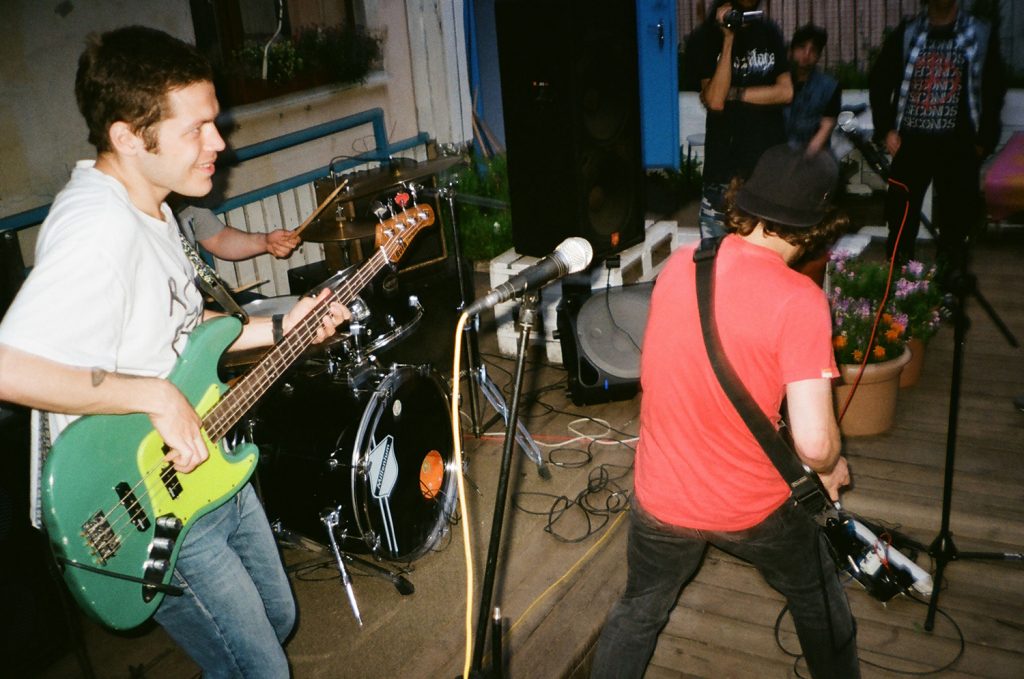
At grassroots level, it is increasingly difficult for a local artist to fill even a modest venue in their hometown, never mind somewhere they’ve never played before. If you’re promoting a show in a 100-capacity room and the headliner can realistically draw 50 or 60 people, two carefully chosen supports bringing another 10 or 15 each can be the difference between a vibrant room and a depressing collection of empty floorboards.
It can also be the difference between breaking even and losing money.
For an out-of-town band, that slot might be their first opportunity to play in front of somebody else’s audience. Twenty people might watch. Five might remember the name. Two might buy something. One might come back next time. That’s not failure. That’s how audiences are built.
None of which means the current support system is perfect. Quite the opposite.
Some promoters have started treating gig bills like a game of musical Tetris, squeezing in as many acts as the available hours will physically permit. Four supports. Five bands. Doors at some stupidly early hour while everyone is still at work.
There’s an obvious economic logic. Five bands selling twenty tickets each can fill a small venue without any one of them having to do the heavy lifting.
But eventually you hit diminishing returns.
Audiences develop support fatigue. Sets become truncated. Whatever money is available gets divided into increasingly small portions. People arrive for the band they know and disappear afterwards. Instead of creating a shared audience, you create several small audiences temporarily occupying the same building.
That isn’t a scene. It’s shift work.
Perhaps the answer isn’t fewer support acts, but better support bills.
One or two artists chosen because somebody believes they complement the headliner, challenge the audience or simply deserve to be heard. Give them enough time to make an impression. Give the audience enough time to care.
Because bands still want to play. Ask almost any young group what they enjoy most about being in a band and sooner or later they’ll talk about playing live. Yet getting onto a stage is becoming increasingly difficult. Grassroots venues are under enormous pressure, and surviving venues understandably need shows capable of putting bodies through the door.
A tribute act offers relative certainty. An unknown band playing songs nobody has heard does not.
So getting onto a bill with a more established artist becomes one of the few ways a developing act can reach beyond friends, family and the handful of devoted souls who turn up every time.
Take that route away and another rung disappears from the ladder.
Of course, some support acts will be terrible. Let’s not romanticise this. I’ve spent plenty of support sets staring into the middle distance wondering what chain of events persuaded the people onstage that forming a band was preferable to literally any other available hobby.
You don’t owe them devotion. You don’t even owe them your undivided attention. Get a drink. Visit the merch stand. Talk to your mate. But perhaps give them ten minutes first. Let them attempt to win you over.
Because somewhere along the way we seem to have developed a peculiar relationship with music where unfamiliarity has become an inconvenience. We want the songs we already know, delivered by the artists we already follow, recommended by an algorithm trained on everything we already liked.
No surprises. No wrong turns. No friction.
But culture needs friction.
Sometimes you should hear a band you’ve never heard of play a song you don’t know. Sometimes they’ll be dreadful. Sometimes they’ll be fine. And every once in a while, halfway through the second song, you’ll stop talking and start paying attention.
That moment is worth protecting.
So next time you go to a gig, get there a little earlier. Watch the supports. Take a chance.
You might discover nothing. You might discover your new favourite band. Once in a generation somebody in a half-empty room discovers the next Oasis, the next Beatles or the next something that doesn’t even have a name yet.
But somebody has to be in the room.
Support your supports.
You really will miss them when they’re gone.

 Tap Share, then Add to Home Screen.