Recently, I wrote about a debate raging across the live music corners of social media concerning the benefits, or otherwise, of support bands. The almighty algorithm has apparently decided that I enjoy getting frustrated by these arguments and now seems determined to feed me the latest musical grievance: bands who refuse to play their biggest hits.
This particular outbreak of indignation appears to have been prompted by Radiohead once again indicating that they wouldn’t be playing their breakout hit Creep on tour. Over the years, they’ve offered various explanations for their reluctance, from its supposedly dreadful lyrics and naïve songwriting to the fear of being permanently defined by a single song. Nevertheless, their apparent willingness to abandon it in favour of other material has upset a considerable number of people and reignited the debate about what audiences should expect from a live performance. Personally, I’m more disappointed that Radiohead haven’t announced they won’t be playing anything from their back catalogue, being a band I can quite happily live without. But the question remains: do artists owe their audiences the songs they want to hear?
It’s hardly a new argument. Bob Dylan discovered just how unforgiving his original folk audience could be when he plugged in an electric guitar in 1965. These previously placid devotees of acoustic authenticity responded by booing their hero until their throats hurt. Had pitchforks and flaming torches been readily available, they’d probably have run him out of town.
But this is a more nuanced argument than the previous support-band debate I mused on. There was a right and wrong side to that one, and I’ll happily die on that hill. This time, things aren’t quite so straightforward. A friend and I have long joked that the worst words you can hear at a gig are, “This is something from our new album…” Usually followed by an utterly forgettable number destined to be filed under filler in the band’s back catalogue. Another friend once attended a concert by a major artist with a lengthy and celebrated career, only to discover that the entire set consisted of material from the artist’s two most recent albums. The ones that had sold approximately ten copies each. My friend was not impressed.
But do artists really owe their audiences another rendition of their first single? When you buy a concert ticket, are you going to experience the artist and their music as it exists today, or simply to hear your favourite recordings reproduced on stage? Because I think there’s an important distinction.
Obviously, this is primarily an issue for artists with long, multi-album careers behind them. There’s little chance of the latest hip young things on your local scene refusing to play the handful of songs that attracted their audience in the first place. But established artists have all sorts of reasons for abandoning particular tracks. Ironically, the crowd favourites are often their earliest hits, songs they may now regard as naïve, embarrassing or entirely unrepresentative of who they’ve become. Some artists have spent decades being defined by a novelty or throwaway recording they never imagined would become their signature tune. Others have watched record companies release songs they never particularly liked in the first place. And then there’s simple familiarity breeding contempt. You might have waited your entire life to hear your favourite song performed live, but the person standing on stage may have played it several thousand times and be thoroughly sick of the bloody thing.
Which brings us to the peculiar business of reinterpretation. An artist, desperate to breathe new life into a familiar composition, might reinvent their biggest hit as an a cappella ballad or a dub-reggae groove. Artistically invigorating for the performer, perhaps, but not necessarily what the audience paid to hear. And people can become remarkably upset when the song they’ve loved for thirty years suddenly emerges sounding like something recorded in an entirely different postcode.
There’s also the uncomfortable reality that artists age. The Arctic Monkeys have endured considerable criticism for the changes in their musical style and Alex Turner’s increasingly languid vocal delivery. One theory is that the rapid-fire delivery of their earliest material has simply become less natural as Turner has matured. Those early songs were crammed with words, barely leaving room to breathe, while their later work has embraced an altogether more measured approach. Whether that’s a physical necessity or a deliberate artistic choice is open to debate, but expecting musicians to perform exactly as they did at twenty is perhaps asking rather a lot. Age catches up with all of us eventually.
Yet does the audience have a right to demand approval of the setlist? Spiralling ticket prices have undoubtedly changed the relationship between performer and paying public. If you’ve handed over upwards of £100 for a concert ticket, is it unreasonable to expect to hear the songs you actually like? And preferably in something resembling their original form? After all, those songs are probably the reason you were prepared to surrender a significant portion of your weekly wage in the first place.
But beneath this argument lies something rather more interesting: the fundamental change in how we’ve been conditioned to consume music over the past two decades.
Streaming has placed virtually the entire recorded history of popular music at our fingertips. Everything can now be reduced to a playlist of personal favourites. There’s no longer any necessity to sit through an entire album, encounter an unfamiliar track or persevere with something that doesn’t immediately appeal. Don’t like it? Skip it. Something difficult? Find something easier. The endless possibilities of discovery have paradoxically made it remarkably easy to avoid discovering anything at all.
And increasingly, people are carrying that mentality into the live environment. If you don’t have to listen to unfamiliar songs at home, why should you tolerate them at a concert? We’ve become accustomed to a world in which entertainment is endlessly curated around our individual preferences, and being confronted with something that doesn’t immediately satisfy those preferences can apparently feel like a personal insult.
Perhaps this helps explain the seemingly inexorable rise of the tribute band. I’m frequently astonished by people perfectly happy to spend £50 watching an Arctic Monkeys tribute act while turning their noses up at paying a fiver to see an exciting young band playing original material in a small venue. But of course, the tribute act offers the live experience with virtually all the risk removed. No tribute band is going to spend twenty minutes exploring obscure album tracks from their inspiration’s difficult fourth record. They’re going to play the hits. Every last one of them. Just as you remember them. The audience gets exactly what it expects, and the original artist becomes almost unnecessary.
It’s music as a heritage attraction. A lovingly maintained reconstruction of something that once happened, preserved for the convenience of people who would rather revisit yesterday than risk encountering tomorrow.
So where does that leave us? I certainly want to hear the songs I love when I go to a concert, and I’d be disappointed if an artist completely ignored the music that attracted me to them in the first place. But I also have considerable sympathy for musicians who want to progress, experiment and leave their youthful creations behind. An artist who spends forty years reproducing the same handful of songs is arguably little different from the tribute act performing them down the road.
And that’s the contradiction. We want our favourite musicians to remain creative, relevant and exciting, provided they don’t change too much from the people we originally fell in love with.
What troubles me more is the wider assumption that the entirety of music exists as a personal jukebox, available to satisfy our individual demands without ever challenging them. It’s a mindset that risks stifling creativity, discouraging discovery and trapping artists inside the expectations of their own audiences.
Music was never supposed to be entirely comfortable. Sometimes the best things happen when somebody plays something you didn’t know you wanted to hear.
Perhaps that’s what we’re gradually losing.
It’s a conflict that’s going to run and run. And I don’t pretend to have the answer.
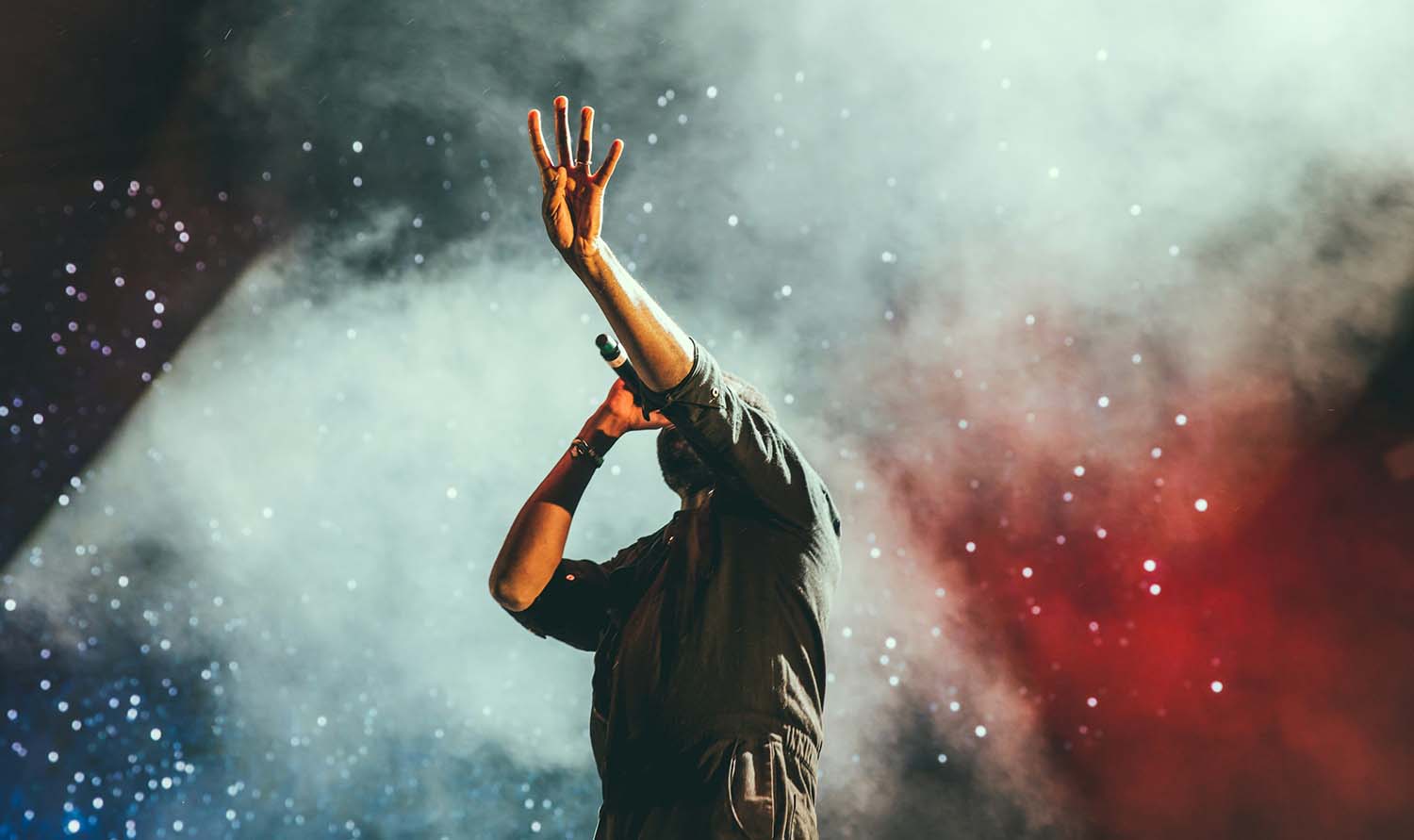
Photo by Austin Neill on Unsplash

 Tap Share, then Add to Home Screen.