
The Proclaimers have spent decades writing about love, politics, working people and Scottish identity. This week, Craig Reid and Charlie Reid used attention around their new album to enter the argument over trans rights, with Craig describing trans-rights activists as “truth-phobic” and reducing trans women to the familiar image of males putting on dresses and make-up.
They have also defended JK Rowling and Graham Linehan, two people whose public interventions on trans issues have become impossible to separate from their wider profiles. Charlie described what happened to Graham Linehan’s career as a tragedy connected to “telling the truth”. At some point, this stops looking like one badly chosen phrase and starts looking like two people showing us exactly where they stand.
More from these artists
- Corin catches the last light of summer on ‘Apple Cider’
- Quiet Houses turn love, friendship and modern dating into a bright indie-pop debut
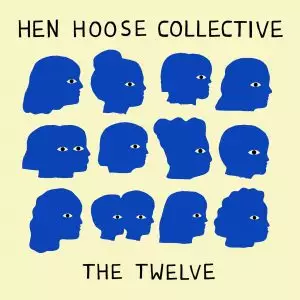
- Hen Hoose Collective come together with warmth, trust, and joy on The Twelve
- Rianne Downey shows quiet power on The Consequence of Love
- Idiogram Go Nuclear with Gritty New Single, ‘Hyperaccumulator’
Fine. They can stand there.
TuneFountain does not have to stand with them. Trans women are women, trans men are men and non-binary people deserve to be recognised for who they are. Reducing trans people to clothes, make-up and somebody else’s fixation on biological definitions is not courageous truth-telling. It is tired culture-war rubbish aimed at a minority already forced to spend far too much time listening to strangers debate whether they know themselves correctly.
Craig and Charlie are free to say what they think. Everyone else is free to tell them they are wrong. That is not censorship, and an argument does not become profound because the person making it has decided everybody disagreeing with them is frightened of truth.
There are thousands of musicians trying to build careers right now who deserve your streams, ticket money, record purchases and attention more than two established performers using an album campaign to recycle arguments trans people have heard for years. TuneFountain exists to find those musicians. So instead of spending the rest of this feature pretending The Proclaimers deserve another symposium, we are putting the spotlight somewhere better.
If their contribution to Scottish music in 2026 is going to include telling trans people what they are while applauding Rowling and Linehan for doing much the same, then fuck that. There are newer, kinder and more interesting voices waiting for the listen instead.
Hen Hoose Collective
There could hardly be a more appropriate place to start than Hen Hoose Collective. The Glasgow-based collective brings together women and non-binary songwriters, musicians and producers, with trans people included as part of a creative community rather than treated as an argument happening somewhere outside it.
That inclusivity is not a marketing slogan pasted onto the project. Hen Hoose exists to create opportunities, share skills and build connections in an industry that has never handed those opportunities out equally.
Their 2026 album The Twelve came from twelve artists spending six days together at Black Bay Studio on the Isle of Lewis. Susan Bear, Inge Thomson, SHEARS, Carla J Easton, Frances McKee, AMUNDA, Djana Gabrielle, Emma Pollock, Jill Lorean, Cariss Crosbie, Ray Aggs and MALKA brought different voices into the same space without anybody being asked to make themselves smaller for somebody else’s comfort.
The record moves through pop, folk, electronic music and R&B because the people making it are allowed to sound like themselves. Difference is not a problem Hen Hoose needs to solve. It is part of what makes the project worth hearing.
There is an obvious contrast here. Include trans people. Include non-binary people. Give musicians opportunities and let them create. Nobody else evaporates because another person has been allowed into the room.
While Craig and Charlie worry about other people’s identities, Hen Hoose are getting on with the considerably more useful business of making music. We know which use of anybody’s time we prefer.
Corin
Scottish songwriter Corin has spent 2026 becoming one of TuneFountain’s favourite emerging voices. Growing up beneath the Ochil Hills, she writes songs built around small details, soft vocals and the moments where somebody starts to understand themselves a little better.
‘Found’ carried the tenderness of personal recovery, while ‘Apple Cider’ brought more rhythm, flirtation and confidence into her writing. Both songs understand something the culture-war crowd repeatedly misses: people are allowed to grow into themselves.
Corin does not stand outside somebody else’s life demanding evidence that they have understood themselves correctly. Her songs are interested in how people feel, how confidence arrives and what happens when somebody starts becoming more comfortable with who they are.
There is room for uncertainty, desire, awkwardness and change. Nobody gets turned into a warning sign or a punchline before the first chorus arrives.
If the choice is another listen for people complaining about how strangers define themselves or putting ‘Apple Cider’ back on, this is not a difficult editorial meeting.
Rianne Downey
Bellshill-born Rianne Downey approaches things from a country and folk direction, writing about relationships, grief, self-worth and what happens when somebody stops trying to become the person everyone else expects.
Her debut album The Consequence of Love rarely needs to shout. Rianne places the writing and her voice at the centre, allowing songs about love, loss and recovery to breathe without turning every feeling into an announcement.
‘Angel’ gets particularly close to why she belongs here. The song looks at the pressure women can feel to reshape themselves into somebody else’s idea of enough.
That pressure changes form depending on who is receiving it, but the arrogance underneath is familiar. Somebody outside your life decides there is one acceptable version of you, then expects gratitude while explaining why you should conform to it.
Rianne’s writing heads in the opposite direction. It asks what happens when somebody stops allowing other people’s expectations to define them, and it does so without needing another person to become smaller first.
We will take that over two established musicians explaining trans identities back to trans people.
Quiet Houses
Edinburgh-raised duo Quiet Houses released their debut album we’re all in love in 2026, turning romance, friendship, community and modern dating into bright indie-pop without pretending any of those things are tidy.
Jamie Stewart and Hannah Elliott write about human beings as complicated creatures rather than categories waiting to be sorted correctly. Their songs make room for affection, bad communication, ridiculous decisions, awkward desire and all the other things that happen when actual people encounter one another.
‘made for love’ finds humour in dating apps and the illusion of endless romantic choice while still recognising the loneliness underneath it. The song works because Jamie and Hannah do not flatten that contradiction into a lecture.
People are messy. Love is messy. Identity can be messy. None of those things becomes less real because somebody cannot summarise it neatly enough for a newspaper interview.
Pop music has spent generations giving people somewhere to hear complicated versions of themselves reflected back. We would rather keep that door open than applaud anyone trying to narrow the definition of who gets through it.
Idiogram
If this has left you wanting something louder, Scottish post-prog quartet Idiogram are happy to provide it. ‘Hyperaccumulator’ pulls guitars, electronics, piano and heavy unison riffs into music that seems perfectly content with several different things happening at once.
The mixture is part of the appeal. Quieter passages sit beside denser ones, electronic textures rub against rock instrumentation and the song gains character from refusing to flatten everything into one shape.
There is an easy metaphor sitting there, but Idiogram deserve better than being reduced to a teaching aid for two men complaining about trans people. They are here because they are a Scottish band making music worth hearing.
That should be enough. Artists do not need to become characters in somebody else’s culture war before we decide they are worth our attention.
Scotland has better voices for this moment
There will be people who hear Craig and Charlie’s comments and still love ‘Sunshine on Leith’. Fine. Great songs do not rewrite themselves because the people who made them later say something disappointing.
Other listeners will find the relationship changes. That is fine too. Nobody is owed permanent affection from an audience, particularly after choosing to use a public platform to tell a minority group what they supposedly are.
TuneFountain is not interested in pretending The Proclaimers suddenly made no good music. We are interested in refusing the ridiculous idea that cruelty becomes bravery when somebody calls it truth.
There is also something faintly absurd about treating two musicians with decades of fame, press access and an enormous cultural footprint as brave outsiders for taking aim at trans people. The people being discussed have considerably less power than the men giving the interview.
Trans people deserve better than being continually turned into the country’s favourite argument. They deserve the boring freedoms everyone else expects: making music, going to gigs, having relationships, changing jobs, buying records, complaining about the weather and getting through an ordinary Tuesday without becoming somebody else’s evidence in a debate.
And this is where our patience runs out. The Scottish music scene is full of artists fighting for rooms, audiences and enough streams to pay for the next recording session. Why should we keep funnelling attention towards musicians whose latest contribution to the conversation is punching down at people who have already heard all of this before?
There is no shortage of alternatives. There are singers writing their first great songs, bands figuring themselves out in tiny venues, producers making records in bedrooms and collectives creating space for people the old industry overlooked. They need the listens. They need the ticket sales. They need somebody to give a shit.
So yes, fuck them. Not their back catalogue, not anybody who still loves those songs, and not the fact that The Proclaimers have had an important place in Scottish music. Fuck the idea that decades of success entitle anyone to use trans people as a target and still expect the rest of us to treat their next record as the most interesting thing happening in Scotland.
It isn’t.
Hen Hoose Collective, Corin, Rianne Downey, Quiet Houses and Idiogram all give us better reasons to talk about Scottish music. They sound nothing alike, come from different corners of the scene and approach songwriting from completely different directions.
Good. Scotland’s music scene should be bigger than one approved way of being Scottish, one approved way of making music or one approved way of being a person.
The Proclaimers can continue saying what they think. We can continue thinking their views on trans people are backwards and insulting. If TuneFountain has to choose where to put its attention next, we would walk considerably more than 500 miles for Hen Hoose Collective, Corin, Rianne Downey, Quiet Houses or Idiogram before spending another five minutes listening to trans women being reduced to dresses and make-up.
And those five are only the beginning. If you have another few minutes, another stream, another gig ticket or another record purchase to spare, Scotland has no shortage of artists who could do something better with it: MALKA, Gemma Ballam, Florence Jack, Liv Dawn, Lucy Tay, Ruby Celeste, PINLIGHT, The Elidas, April Jai, Alex Amor, Megan Black, Brontës, Bikini Body, Azamiah, bogle, FAEDA, The Marches, Shay O’Dowd, Rona Bryden, Zoe Eliza, Emilie Leslie and STAGBOY. Go find somebody new.





 Tap Share, then Add to Home Screen.